
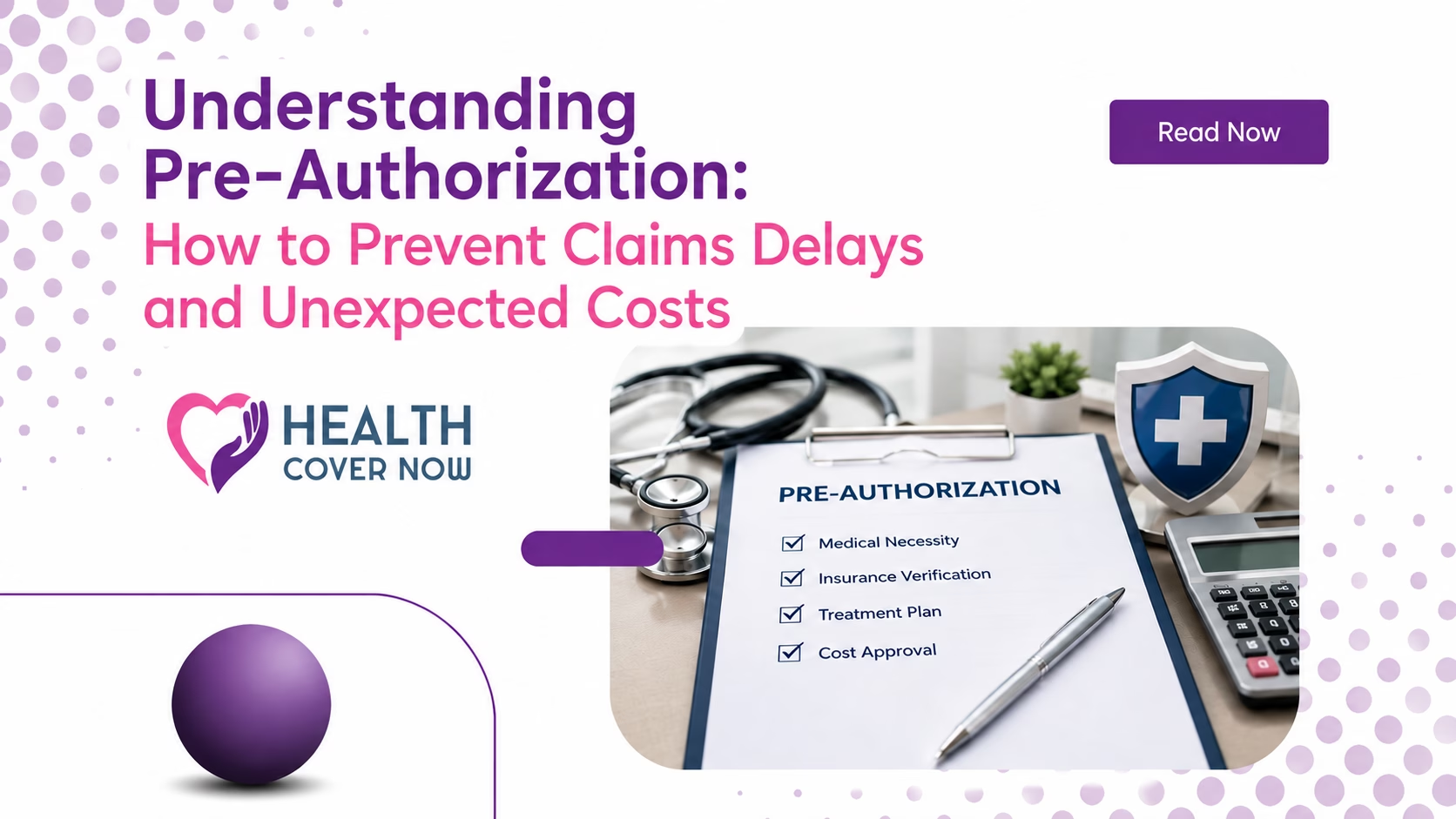
International and corporate health insurance can provide employees with valuable access to private hospitals, specialist treatment, and direct-billing services. Instead of asking employees to manage substantial medical expenses themselves, insurers can often coordinate payment directly with the healthcare provider when the appropriate procedures are followed. However, one important step can determine whether that process runs smoothly: pre-authorization.
When employees begin planned treatment without obtaining the required approval, a straightforward medical procedure can quickly become an administrative problem. Hospital admissions may be delayed, direct billing may not be available, and employees could be asked to pay significant amounts upfront while coverage is being reviewed.
For HR teams, the solution is not simply to remind employees that pre-authorization exists. They need to understand when it is required, what information must be provided, how long the process may take, and what to do when circumstances change unexpectedly. A clear employee education process can reduce avoidable claims complications, improve the healthcare experience, and allow HR departments to spend less time resolving preventable insurance issues.

Know When Pre-Authorization Is Required
Pre-authorization, also known as prior approval or treatment authorization, is generally used by insurers to confirm that proposed treatment is eligible under the policy before incurring high medical costs.
Requirements vary between insurers and policies, so employees should always check their specific plan rules. However, certain categories of treatment commonly require advance approval.
The Key Authorization Checklist
Employees should be encouraged to contact their insurer or assistance provider before proceeding with:-
- Hospital Admissions: Planned inpatient treatment, overnight hospital stays, and scheduled admissions.
- Surgical Procedures: Planned surgeries and certain outpatient procedures that involve high medical costs.
- High-Cost Treatment: Expensive procedures, investigations, or treatment that exceed the insurer’s applicable authorization threshold.
- Ongoing Medical Care: Long treatment programs such as oncology, dialysis, rehabilitation, or repeated physiotherapy sessions.
- Advanced Diagnostics: Certain MRI, PET, CT, or other specialized diagnostic investigations.
- Specialist Treatment: Selected consultations or procedures that require prior approval under the policy.
- Mental Health Services: Certain inpatient or outpatient mental health treatment may require authorization.
- Major Dental Procedures: Dental implants, oral surgery, and other high-cost dental procedures where the policy requires approval.
- Medical Evacuation: Arrangements involving emergency or medically necessary evacuation typically require coordination with the insurer’s assistance team.
The important lesson for employees is simple: If the treatment is planned, expensive, specialized, or involves hospitalization, check whether authorization is required before receiving care. Do not ask employees to memorize every authorization rule. Instead, provide them with a simple checklist and the insurer’s contact details. The objective is to make the correct action obvious when an employee is arranging treatment.

Starting The Process: What the Insurer Needs
Once an employee identifies that pre-authorization is required, the next step is initiating the formal submission request. For planned medical care, assignees should ideally start this process several working days prior to their scheduled procedure, keeping in mind that exact lead times depend on the specific insurer and the complexity of the treatment involved.
Pre-authorization requests can typically be submitted through an insurer’s mobile application, online member portal, assistance hotline, or dedicated email channel. Alternatively, requests can be managed directly through approved healthcare providers or via your insurance broker’s advisory team, who can help ensure all required medical documentation is submitted accurately to avoid unnecessary delays.
Employees May Need to Provide:-
- Medical diagnosis: The condition or reason for treatment.
- Doctor’s recommendation: The physician’s proposed treatment or procedure.
- Treatment details: What procedure or care is planned and why it is medically necessary.
- Hospital information: The name and location of the healthcare facility.
- Admission information: Planned admission and discharge dates where applicable.
- Estimated cost: A quotation or detailed cost estimate from the hospital.
- Supporting medical records: Relevant reports, test results, or previous treatment information when requested.
Submitting complete information at the beginning can help prevent unnecessary back-and-forth between the employee, hospital, and insurer. Incomplete documentation can result in additional questions, delayed authorization, or the need to reschedule planned treatment. When introducing the health plan, provide employees with a one-page “Before You Receive Planned Treatment“ guide. It should clearly explain who to contact, what information to prepare, and how far in advance they should start the process.

Understanding The Guarantee of Payment (GOP)
For employees utilizing direct-billing hospital networks, the pre-authorization process typically results in a Guarantee of Payment (GOP) issued directly from the insurer to the medical provider. This document confirms that the insurer has reviewed and approved the proposed treatment, agreeing to settle all eligible medical expenses directly with the hospital so the employee is not forced to pay substantial bills out of pocket.
However, receiving a GOP does not automatically mean every single hospital charge will be covered in full. The final amount settled by the insurer remains subject to specific policy parameters, including annual benefit caps, policy exclusions, reasonable and customary charge limits, and remaining balance thresholds. Even with an approved GOP in place, the employee remains personally responsible for settling any mandatory deductibles or co-payments outlined in their coverage terms.
What Employees Should Check
Before treatment begins, employees should confirm:-
- The treatment has been authorized.
- The hospital has received the relevant authorization or GOP.
- The approved treatment matches what the doctor intends to provide.
- Any deductible or co-payment is understood.
- Any excluded or non-covered services have been identified.
This small amount of preparation can prevent considerable confusion at the hospital.

What Happens When Treatment Is Urgent?
Not every medical situation allows employees to plan several days. Emergencies require a different approach. If an employee experiences a genuine medical emergency, they should seek appropriate medical attention immediately rather than delaying care while waiting for insurance approval. Once the employee is medically stable and it is safe to do so, they or a family member should contact the insurer’s emergency assistance service as soon as possible.
The insurer may then coordinate with the hospital regarding:-
- Eligibility verification
- Admission arrangements
- Direct billing
- Medical documentation
- Authorization requirements
- Transfer or evacuation, where applicable
Hospitals may sometimes request an admission deposit, payment guarantee, or temporary card authorization while insurance arrangements are being confirmed. Employees should not automatically assume that such a request means the claim has been rejected. The important step is to communicate with the insurer and hospital promptly so that the appropriate arrangements can be made. Make emergency assistance numbers easily accessible. Include them in employee insurance cards, onboarding materials, mobile benefits applications, and internal HR resources. During an emergency, employees should not have to search through old emails to find the number they need.

What If the Employee Uses an Out-of-Network Hospital?
While international health insurance plans typically provide access to extensive networks of approved medical facilities, assignees may occasionally choose or need to visit an out-of-network provider. In these situations, direct billing arrangements are usually unavailable, requiring the employee to pay for medical services out of pocket. To secure reimbursement, the employee must carefully gather all itemized invoices, payment receipts, detailed treatment records, diagnostic reports, and prescriptions before completing and submitting the insurer’s formal claims documentation.
It is critical to note that paying upfront for out-of-network medical care does not guarantee 100% reimbursement from the insurer. Every submitted claim is thoroughly evaluated against the policy’s specific terms, annual benefit caps, deductibles, co-payments, and customary cost limits for that geographic region. Consulting with an independent broker like Health Cover Now ensures employees understand their out-of-network terms before receiving care, preventing unexpected financial surprises down the line.
Documentation Matters
Encourage employees to keep their original medical documentation where required. Depending on the insurer and claim value, documentation may include:
- Original invoices
- Official receipts
- Medical reports
- Prescriptions
- Diagnostic results
- Treatment summaries
- Proof of payment
- Insurance claim forms
- Identification documents
A missing document can create additional correspondence and delay the reimbursement process.

Common Pre-Authorization Mistakes HR Can Help Prevent
Many authorization problems are not caused by complicated insurance rules. They happen because employees simply do not know what to do. HR teams can reduce these issues by addressing the most common mistakes during benefits onboarding.
Mistake 1: Waiting Until the Day of Treatment
Employees sometimes contact the insurer immediately before a planned procedure.
Better approach: Encourage employees to start the authorization process as early as the policy permits.
Mistake 2: Assuming the Doctor Handles Everything
A hospital may assist with insurance administration, but the employee remains responsible for understanding their policy obligations.
Better approach: Tell employees to confirm that authorization has actually been issued before planned treatment.
Mistake 3: Assuming Every Hospital Is Direct-Billing
Direct billing depends on the insurer’s network and the specific provider arrangement.
Better approach: Verify the hospital’s network status before treatment.
Mistake 4: Ignoring Deductibles and Co-Payments
Employees may assume an approved procedure means they have nothing to pay.
Better approach: Explain that authorization confirms eligible coverage but does not necessarily remove the employee’s contractual cost-sharing obligations.
Mistake 5: Losing Medical Documentation
Employees sometimes submit incomplete reimbursement claims.
Better approach: Encourage them to retain every relevant receipt, invoice, prescription, and medical report.

How HR Can Create a Better Claims Experience
A successful employee benefits program is not simply about purchasing a comprehensive policy. It is also about ensuring employees know how to use it.
HR teams can create a simple internal process covering five essential stages:-
Before Treatment
Employees should check whether authorization is required and identify an approved provider.
During the Authorization Process
They should submit complete medical and cost information and respond promptly if the insurer requests clarification.
Before Admission
Employees should confirm that the hospital has received the authorization or GOP and understand any personal contribution.
During Treatment
They should keep relevant medical documentation and notify the insurer if the treatment plan changes significantly.
After Treatment
Employees should confirm whether the hospital settled directly with the insurer or whether a reimbursement claim must be submitted. This simple framework gives employees a clear roadmap rather than leaving them to navigate the insurance system independently.
How an Independent Broker Can Support Your HR Department
Managing corporate health insurance can become particularly challenging when employees are spread across multiple countries, hospitals, and healthcare systems. An experienced independent broker can act as the communication bridge between the employer, employee, healthcare provider, and insurer. When an authorization issue arises, broker support may include:-
- Helping employees understand the insurer’s authorization requirements.
- Communicating with the insurer regarding outstanding documentation.
- Coordinating with hospitals where appropriate.
- Clarifying benefit eligibility and policy provisions.
- Helping identify suitable in-network healthcare providers.
- Supporting employees when direct billing cannot be arranged.
- Guiding members through the reimbursement claims process.
- Escalating unresolved administrative issues to the appropriate insurer contacts.
- Helping HR reduce the amount of time spent handling individual employee insurance questions.
The broker’s role should not replace the insurer’s claims or medical-assistance function. Instead, it can provide an additional layer of guidance and coordination, helping employees and HR teams understand what needs to happen next.
The Bottom Line
Pre-authorization is not simply another insurance formality. For organizations providing international or private medical benefits, it is an important part of keeping planned treatment, direct billing, and claims administration running smoothly. The most effective strategy is proactive education. Employees should know when authorization may be required, who to contact, what information to provide, what a Guarantee of Payment means, and what to do if an emergency or out-of-network situation occurs. For HR teams, a small investment in clear communication can prevent significant confusion later.
And when complex cases arise, having an experienced independent broker available to coordinate communication and explain the available options can make the process considerably easier for everyone involved. Ultimately, the goal is straightforward: employees should be able to focus on receiving the healthcare they need, while HR has the confidence that the benefits process is being managed efficiently and responsibly. If your organization is reviewing its corporate health insurance arrangements, an independent broker can help assess your current benefits structure, compare suitable market options, and identify practical ways to improve employee support while maintaining appropriate cost control.
At Health Cover Now, Richard Yates is a Licensed International Health and Medical Insurance Broker with nearly 20 years of industry experience. He provides independent, unbiased advice and compares plans from more than 25 leading international health insurers to help expatriates, families, retirees, digital nomads, and businesses find coverage that matches their healthcare needs, lifestyle, and budget.
If you want more information on the topic or would like to receive some advice, please contact us here at info@healthcovernow.com, richard@healthcovernow.com